
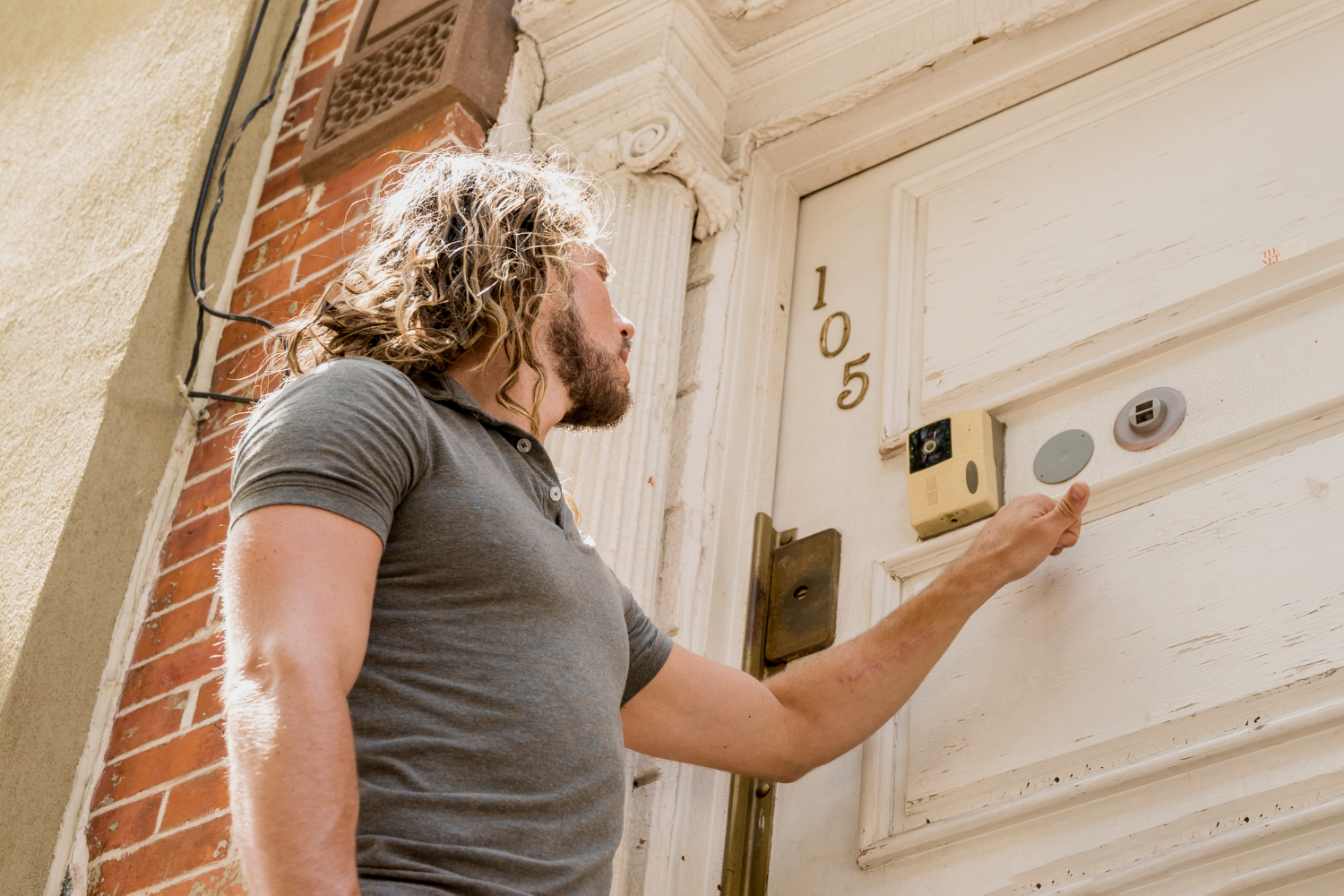
The approach follows a simple structure:
- Short intro: Volunteers state who they are and why they're there in 20 seconds
- Two questions: Open-ended questions that let voters or residents share concerns
- One clear ask: A specific action request—pledge to vote, sign a petition, or attend an event
- Conversation lasts 2–4 minutes: Brief enough to respect time, long enough to build connection
- Every outcome is logged for follow-up: Data captured on stance, issues, and next steps
Origins and Evolution of Door-to-Door Canvassing
Canvassing grew from early civic and labor outreach into modern, data-driven field work.
The practice evolved through distinct phases:
| Era | Development | Impact |
|---|---|---|
19th–early 20th century | Political parties and labor unions conducted precinct walks to identify supporters | Established door-to-door contact as core organizing method |
Post-war era (1950s–1980s) | Campaigns standardized scripts and built voter registration lists | Made outreach more systematic and scalable |
1990s–2000s | Micro-targeting emerged with digital maps and voter databases | Allowed campaigns to prioritize high-impact doors and track effectiveness |
2010s–today | Mobile apps enable live data sync, GPS mapping, and built-in compliance features | Combines personal touch with real-time technology and instant reporting |
Today's door-to-door work combines the personal touch of traditional organizing with real-time technology. Volunteers now carry tablets or phones that show which doors to knock, what to ask, and how to log results instantly.
For the broader practice beyond doorsteps, see What is Canvassing: Go-To Action Platform for Field Actions—which covers phone banking, texting, and event outreach alongside door-to-door work.
Why Do People Still Knock on Doors?
Human contact moves people to act when digital outreach alone cannot.
Despite the rise of social media and text campaigns, door-to-door canvassing remains essential for five reasons:
- Trust: Neighbors beat anonymous ads—face-to-face conversations build credibility that digital messages struggle to match
- Clarity: Voters get precise "how, when, where" information—especially critical for voting locations, registration deadlines, or event details
- Commitment: Making a plan at the door increases follow-through—people who verbally commit are more likely to act
- Listening: Issues surface that shape better messaging—volunteers hear concerns that inform campaign strategy
- Recruitment: Volunteers and event RSVPs grow fastest at doors—in-person asks convert better than emails or social posts
Research shows that political scientists view canvassing as one of the most effective ways to talk to community members.
Ready to plan smarter field actions? Discover Qomon's Canvassing App to map routes, assign volunteers, and log results in real time.
5 Core Principles of Door-to-Door Canvassing
Keep it respectful, brief, and data-honest.
Effective door-to-door canvassing follows five core principles:
- Consent & respect: Honor "no" immediately and respect posted "no soliciting" notices—never argue or linger
- Clarity: Make one ask per door—multiple requests confuse the conversation and reduce commitment rates
- Listening first: Ask two open questions before delivering your message—this builds rapport and surfaces real concerns
- Safety: Work in pairs when possible, schedule check-ins, and wear visible ID badges or campaign shirts
- Data hygiene: Tag stance, log notes, and record next steps—every time, without exception
These principles protect both volunteers and residents. They also ensure that your data stays clean and actionable for follow-up.
What Types of Door-to-Door Canvassing Exist?
Not all doorstep conversations aim for the same outcome—goals shape the style.
Door-to-door canvassing takes different forms depending on campaign objectives:
| Type | Goal | Typical Duration | Best For |
|---|---|---|---|
Voter canvassing | Identify supporters, persuade undecided voters, or get out the vote | 2–4 minutes | Political campaigns, election mobilization |
Advocacy canvassing | Educate residents and gather pledges, petition signatures, or testimonials | 3–5 minutes | Issue campaigns, nonprofit awareness drives |
Fundraising canvassing | Ask for recurring or one-time donations | 4–6 minutes | Nonprofits, charitable organizations (non-commercial only) |
Relational or deep canvassing | Explore personal values, build empathy, and shift beliefs on complex issues | 10–15 minutes | Polarizing issues, long-term attitude change, movement building |
For detailed compliance guidance, check Is Door-to-Door Canvassing Illegal? and review best practices in Door-to-Door Canvassing Hours.
How Does Door-to-Door Canvassing Work? (Step-by-Step)
Map. Knock. Listen. Ask. Log. Follow up.
Here's how modern field teams run door-to-door canvassing:
1. Target & Map High-Yield Blocks
Use voter data or demographic info to prioritize neighborhoods with the highest concentration of persuadable or mobilizable residents
2. Introduce and State Purpose in 20 Seconds
"Hi, I'm [Name] with [Organization]. We're talking to neighbors about [Issue]."
3. Ask & Listen to Tailor the Message
"What matters most to you about [topic]?" or "Have you thought about how you'll vote in [election]?"
4. Make One Ask
Request a specific action—pledge to vote, sign a petition, RSVP to an event, or volunteer
5. Log & Follow Up Within 24–48 Hours
Record the outcome, stance, and next step immediately using your mobile app or paper form
Tracking forms should indicate the number of doors knocked, the number of conversations had, and the number of supporters identified—this data is central to measuring impact and guiding follow-up.
For a deeper analysis of effectiveness, see Is Door-to-Door Canvassing Effective?
Data Model: What the Definition Implies for Logging
The definition requires disciplined data capture to be useful.
Every door conversation should generate structured data that informs follow-up and strategy. Must-log fields include:
- Result: Contacted, not home, refused, or moved
- Stance and priority issue: Support level (strong, lean, undecided, opposed) and top concern mentioned
- Consent and preferred channel: Permission for follow-up via text, email, or phone
- Next step and due date: Specific action assigned (send reminder, invite to event, add to volunteer list) with a deadline
Without this data discipline, canvassing becomes anecdotal. With it, campaigns can segment voters, prioritize persuasion targets, and measure field performance accurately.
Metrics That Prove It Works (Door-Specific)
Measure yield, not just effort.
Track these four key performance indicators to assess door-to-door impact:
- Contact rate and contacts per hour: What percentage of doors result in actual conversations? How many conversations does each volunteer complete per shift?
- Ask conversion rate: Of those contacted, how many agreed to your ask (ID as supporter, commit to vote, volunteer signup)?
- Follow-up speed within 48 hours: Are you re-contacting persuadable voters or new volunteers quickly enough to maintain momentum?
- Cost per action or added vote: What's the dollar cost (volunteer time + materials) per pledge, signature, or vote generated?
Organizations should debrief events with volunteers, thank them, and sign people up for the next event—this cycle of recruitment and feedback keeps canvassing efforts vital and continuously improving.
These metrics help campaigns optimize routes, improve scripts, and allocate resources to the highest-impact activities.
The most "Qomon" questions
What exactly is door-to-door canvassing?
Door-to-door canvassing is face-to-face outreach where volunteers visit homes to inform, persuade, and mobilize residents for political campaigns, advocacy causes, or nonprofit missions. The goal is to have brief, personal conversations that lead to specific actions.
How is door-to-door canvassing different from door-to-door sales?
Door-to-door canvassing focuses on political, civic, or advocacy goals—not commercial sales. Canvassers ask for pledges, signatures, or volunteer commitments, while salespeople sell products or services for profit. Most jurisdictions protect canvassing under free speech laws.
What makes something "canvassing" versus just knocking on doors?
Canvassing is systematic and data-driven. It involves targeting specific households, following a script or talking points, logging every interaction, and scheduling follow-ups. Random door-knocking without data capture or strategy is not canvassing.
Does door-to-door canvassing always happen at homes?
Primarily yes, but the term also covers doorstep conversations in apartment buildings, dormitories, or residential facilities. The defining feature is face-to-face contact at someone's residence, not in public spaces like streets or events.
Is door-to-door canvassing the same as door knocking?
Yes, the terms are interchangeable. "Door knocking" and "door-to-door canvassing" both describe the same practice of visiting homes for face-to-face political or advocacy conversations.
What is the main goal of door-to-door canvassing?
The main goal is behavior change—getting people to vote, sign petitions, attend events, volunteer, or donate. Unlike awareness campaigns, canvassing aims for measurable actions, not just information sharing.
How long is a standard door conversation?
Two to four minutes. Longer conversations risk losing volunteers' time for additional contacts. Shorter conversations often fail to build rapport or collect useful data.
What if no one answers?
Mark the attempt in your system and leave literature if allowed. Schedule a second knock at a different time—evenings and weekends typically yield higher contact rates.