
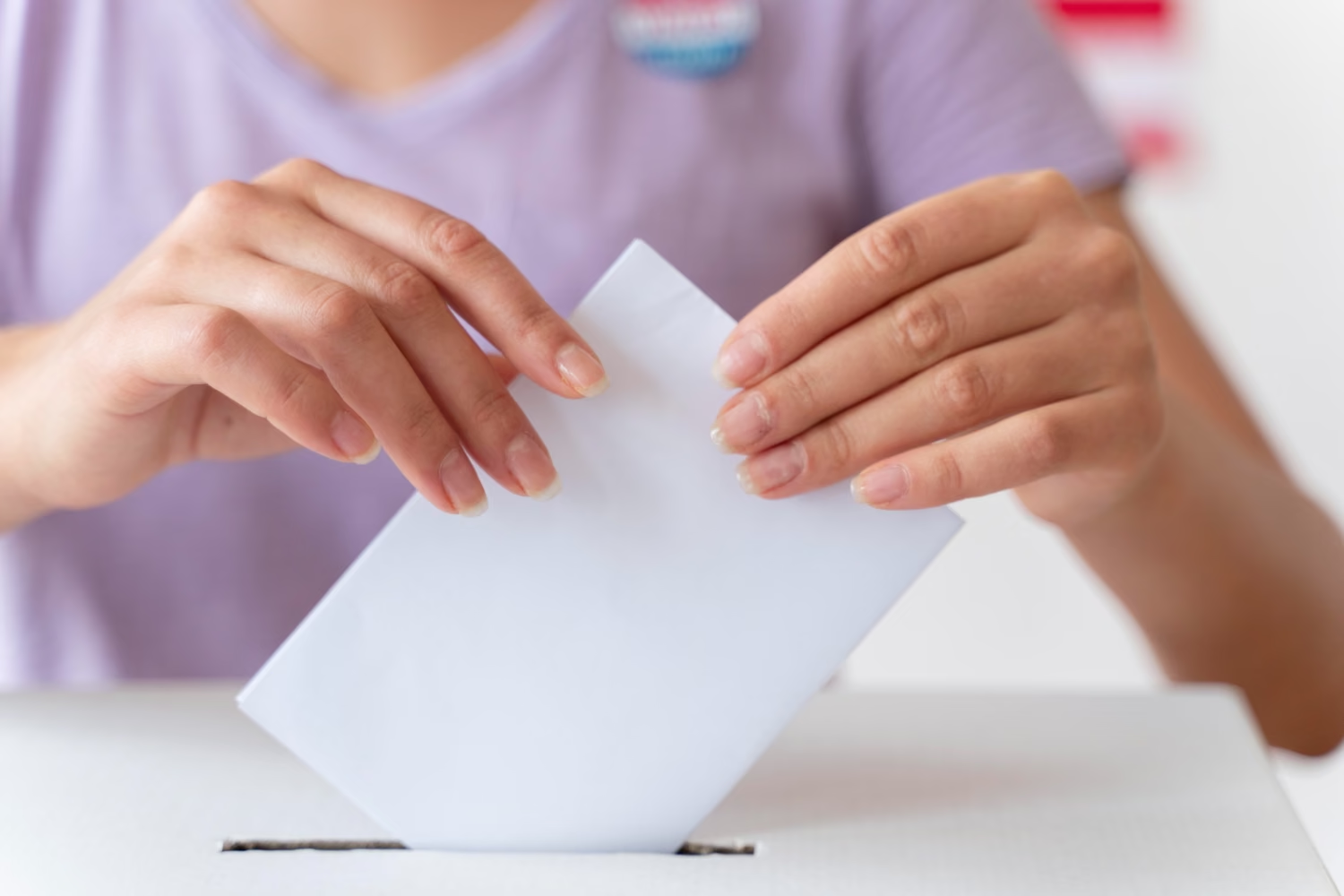
What Is Vote Canvassing? (Definition)
Vote canvassing is the action of personally contacting voters to discuss candidates, ballot measures, or issues—and encouraging them to vote or support a specific position.
Vote canvassing relies on three core components:
- Targeted voter contact: Reaching specific voters based on demographics, voting history, or issue alignment
- Persuasion and information delivery: Sharing messages that resonate and address voter concerns
- Data collection for follow-up: Recording responses to prioritize reminders, persuasion attempts, or volunteer recruitment
This personal approach makes canvassing one of the most effective field actions in modern campaigns.
Why Do Campaigns Use Vote Canvassing?
Personal conversations change voter behavior more effectively than passive ads. Canvassing builds trust, surfaces concerns, and delivers measurable turnout gains.
Here's why campaigns prioritize canvassing:
- Proven turnout boost: Research shows personal contact raises voter participation significantly
- Real-time voter feedback: Volunteers capture concerns, questions, and sentiment on the ground
- Data-driven follow-ups: Responses help campaigns segment voters and prioritize persuasion or mobilization
- Volunteer engagement: Canvassing strengthens ownership and builds people-powered movements
- Seamless integration: Tools like Qomon's Door-to-Door App centralize data, assign routes, and track progress instantly
What Are the Types of Vote Canvassing?
Campaigns use in-person, phone, and digital canvassing to reach diverse voters based on accessibility, geography, and resources.
Common Canvassing Methods:
- Door-to-door canvassing: Face-to-face conversations at homes or public spaces—most effective for persuasion
- Phone banking: Scripted calls and relational outreach to reach voters quickly at scale
- Peer-to-peer texting : Personalized mass messaging that feels conversational and direct
- Event canvassing: Outreach at rallies, farmers' markets, or high-traffic locations to engage undecided voters
Each method serves different goals. Door-to-door works best for persuasion. Phone banking scales fast. Texting reaches younger voters. Learn more about what canvassing looks like in action across different contexts.
What Are Deep Canvassing and Relational Canvassing?
Deep canvassing focuses on longer, empathetic conversations to shift beliefs and build trust—especially on polarizing or complex issues.
Deep canvassing differs from traditional vote canvassing:
- Engages voters emotionally: Goes beyond talking points to explore personal stories and values
- Bridges partisan divides: Proven effective in reducing prejudice and combating polarization
- Builds long-term engagement: Strengthens movements by creating authentic connections
- Requires longer conversations: Deep canvassing conversations typically last 10-15 minutes versus brief traditional contacts
Relational canvassing leverages personal networks—volunteers contact friends, family, and neighbors. This method increases trust and turnout because voters hear from people they already know.
For campaigns focused on building people-powered movements, combining traditional canvassing with deep and relational strategies creates lasting impact. Explore election canvassing strategies to see how volunteers drive change.
How Effective Is Vote Canvassing?
Vote canvassing consistently boosts turnout when messages are timely, relatable, and delivered by trained volunteers.
Verified Research Findings:
Door-to-Door Canvassing Impact: Personal canvassing increased voter turnout by approximately 6% in a 1998 New Haven field experiment (Gerber & Green, PNAS, 1999).
Deep Canvassing Results: A 2016 field experiment found that deep-canvass conversations changed approximately one in 10 voters' attitudes about transgender people, with effects persisting for at least 3 months (Broockman & Kalla, Science, 2016). A 2020 study on immigration attitudes showed that deep canvassing increased support for pro-immigrant policies from 29% to 33%, with effects lasting three months or more).
Method Comparison: Phone calls from professional phone banks were less effective than direct mail at increasing voter turnout, while personal canvassing had a far greater influence on voter participation than three pieces of professionally crafted mail (J-PAL, 1998).
These numbers prove that personal contact works. Campaigns using Qomon's go-to action platform track results in real time, helping volunteers focus on what drives impact.
How Does Vote Canvassing Work? (Step-by-Step)
Vote canvassing follows a structured process supported by volunteer training, data tools, and real-time tracking.
Step-by-Step Canvassing Process:
- Segment the voter list: Identify priority voters based on turnout likelihood, persuadability, or issue alignment
- Train volunteers and distribute scripts: Equip teams with talking points, responses to objections, and data collection guidelines
- Conduct outreach through the preferred channel: Deploy volunteers for door-to-door, phone banking, or texting campaigns
- Collect responses in real time: Use mobile apps to log conversations, voter sentiment, and follow-up needs
- Assign follow-ups or voting reminders: Re-contact undecided voters or send reminders as Election Day approaches
Organizations using Qomon's platform centralize contacts, map field actions, and analyze results instantly. This structured approach turns volunteer energy into measurable outcomes.
Time for smarter field organizing. See how Qomon helps campaigns mobilize faster—get a live demo.
Why Vote Canvassing Matters for Election Integrity
"The canvass confirms that all valid ballots cast in the election are accurately counted and included in the final election results."
— U.S. Election Assistance Commission, Canvass and Certification Quick Start Guide (2022)
Source: EAC Canvass and Certification Guide (PDF)
While field canvassing focuses on voter contact before elections, the term "canvass" also refers to the post-election process of verifying and certifying results. Both ensure democratic participation and accuracy.
What Tools Support Effective Vote Canvassing?
Effective canvassing relies on voter databases, field apps, and real-time dashboards to coordinate volunteers and track progress.
Essential canvassing tools include:
- Voter data segmented by issues: Prioritize contact lists based on turnout history, demographics, or policy interests
- Script and volunteer management systems: Standardize messaging while allowing flexibility for authentic conversations
- Real-time reporting via mobile apps: Use tools like Qomon's Door-to-Door Mobilization App to log results instantly, assign routes, and measure impact
Qomon centralizes all these functions in one platform. Volunteers map actions, collect data offline, and sync results automatically. Campaign managers see live dashboards showing which neighborhoods need follow-ups and which messages resonate.
Discover how ballot canvassing strategies integrate technology and volunteer power to drive turnout.
The most "Qomon" questions
Is vote canvassing legal everywhere?
Yes, but rules vary by location. Door-to-door canvassing is legal in most democracies. Some areas restrict contact hours or require permits for large-scale operations. Always check local election laws before launching campaigns.
Does canvassing work in national elections?
Yes. Canvassing works at every level—local, state, and national. National campaigns use canvassing to mobilize swing districts and battleground states. Research shows personal contact increases turnout across all election types.
How long should a canvassing conversation last?
Traditional canvassing conversations typically last 30 seconds to a few minutes. Deep canvassing conversations run longer—10 to 15 minutes—to build trust and explore voter perspectives on complex issues. Choose the approach based on your campaign goals.
What does a canvassing script look like?
A good script includes an introduction, a clear ask, responses to common objections, and data collection prompts. Scripts should feel conversational—not robotic. Volunteers adapt language based on voter reactions while staying on message.
How do I measure canvassing success?
Track contacts made, conversations completed, persuasion attempts, and follow-up needs. Post-election, compare turnout in canvassed areas versus non-canvassed controls. Tools like Qomon provide real-time dashboards showing volunteer activity, voter sentiment, and field progress.
Start Mobilizing Smarter Today
Ready to turn volunteer energy into measurable impact?
See how Qomon helps campaigns and nonprofits mobilize supporters, map actions, and track results in real time—all in one platform.
Book a demo and discover why 600+ organizations trust Qomon to power people-powered movements.
Sources :
- Does canvassing increase voter turnout? A field experiment, PNAS, 1999
- Want to persuade an opponent? Try listening, Berkeley scholar says, UC Berkeley News, 2020