
Understanding Canvassing Risks
Canvassing involves real but manageable risks. Awareness is the first step toward prevention.
Volunteers who understand potential hazards make better decisions in the field. Campaign coordinators who plan for risks create safer environments for their teams.
Types of canvassing risks:
Personal safety risks include encounters with hostile residents or uncomfortable situations. These are rare—most voters are polite, even when they disagree with your message.
Environmental hazards include weather exposure, uneven terrain, and aggressive animals. Canvassers walk 2-5 miles per shift across varied conditions.
Health concerns range from sun exposure to illness transmission. Physical strain affects volunteers who don't prepare adequately.
Emotional stress comes from repeated rejection or negative interactions. Even experienced canvassers feel this impact over time.
For complete guidance on efficient canvassing, read our tips on maximizing efficiency with canvassing tools.
The 7 Principles for Safer Canvassing
The Local Government Association (UK, 2024) identified seven core principles for canvasser safety. These apply to political campaigns, nonprofits, and advocacy organizations.
Principle 1: Be Prepared, Not Scared
Preparation eliminates most safety concerns. Confident canvassers handle challenges better than anxious ones.
How to prepare:
- Conduct risk assessments before canvassing sessions
- Seek training from your campaign or local police
- Learn about the neighborhoods you'll visit
- Trust your instincts when something feels wrong
Coordinators should involve experienced volunteers in planning. Their local knowledge helps identify potential issues before they occur.
Principle 2: Focus on Group Safety
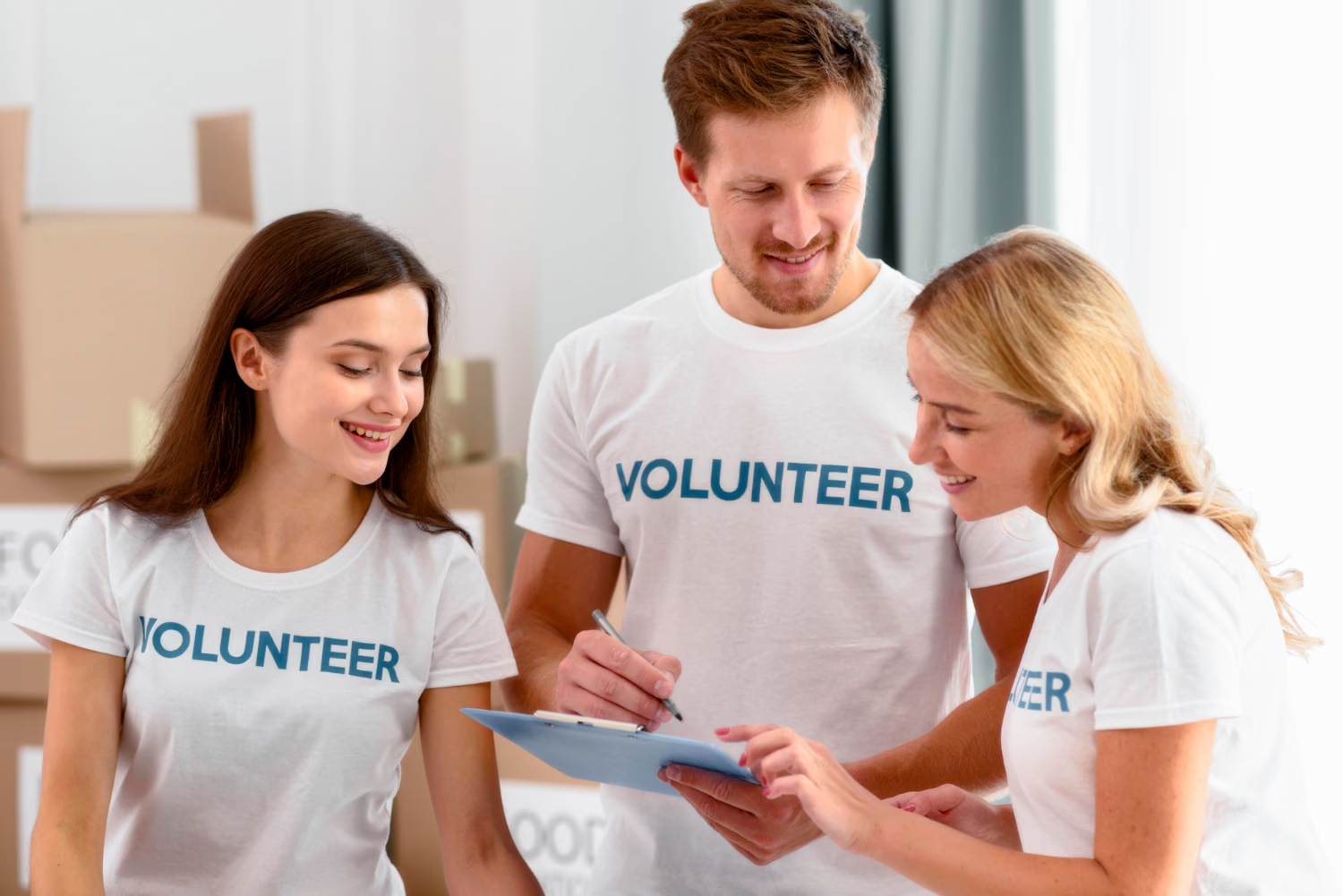
Canvassing in pairs or groups reduces risk dramatically. It's also more enjoyable.
Group safety practices:
- Always use a buddy system
- Pair new canvassers with experienced volunteers
- Never leave volunteers under 18 unaccompanied
- Stop and discuss any incidents that occur
If you must canvass alone, ensure others know your location. Check in when you finish safely.
Principle 3: Communicate Actively with Your Team
Open communication keeps everyone informed and protected. Share plans, experiences, and concerns freely.
Communication protocols:
- Share detailed canvassing routes before shifts
- Establish regular check-in times
- Create a code word for uncomfortable situations
- Meet at designated points throughout your route
A code word helps canvassing partners signal distress discretely. When one partner uses it, both leave immediately.
Principle 4: Use Technology for Safety
Modern tools enhance canvasser safety significantly. Smartphones and apps provide location tracking and emergency features.
Technology safety tools:
- GPS tracking apps (Life360, bSafe, or similar)
- Smartphone emergency SOS features
- Canvassing apps with real-time location sharing
- Personal safety alarms
Familiarize yourself with your phone's emergency features before canvassing. Most smartphones allow quick emergency calls without unlocking.
Want to track your team's location in real time? Discover Qomon's Canvassing App and keep volunteers connected throughout every field action.
Principle 5: Stay Security Aware
Security awareness means recognizing and avoiding potential threats. Simple precautions prevent most problems.
Security best practices:
- Canvass during daylight when possible
- Carry only essentials (no valuables)
- Never enter residents' homes
- Follow do-not-knock lists strictly
- Update lists when you encounter problems
If canvassing after dark, take extra precautions. Prioritize well-lit streets and populated areas.
Principle 6: Keep Detailed Records
Document every incident, no matter how minor. Good records help future canvassers and enable appropriate responses.
What to record:
- Date, time, and location
- Description of what happened
- Individuals involved
- Actions taken
- Follow-up needed
Share incident reports with your campaign coordinator. Add problematic addresses to do-not-knock lists immediately.
Principle 7: Prioritize Aftercare
Support volunteers who experience difficult interactions. Aftercare prevents long-term emotional impact and volunteer burnout.
Aftercare practices:
- Debrief after every canvassing session
- Encourage sharing of both positive and negative experiences
- Never pressure volunteers to continue after incidents
- Provide access to additional support when needed
Physical Safety Tips for Canvassers
Practical precautions protect you from common physical risks. These simple habits prevent most injuries and uncomfortable situations.
At the Door
Position yourself safely before each knock. Your body language affects both your safety and the resident's comfort.
Door approach safety:
- Step back after knocking (arm's length minimum)
- Angle yourself for clear view of doorway
- Keep a clear exit route behind you
- Watch for movement inside before door opens
Standing at an angle looks less intimidating to residents. It also lets you assess the situation as the door opens.
Weather and Terrain
Environmental hazards cause more injuries than hostile residents. Prepare for conditions you'll encounter.
Weather preparation:
Wear appropriate footwear for terrain. Most canvassers walk 2-5 miles per shift. To understand typical canvassing pace, read our guide on how many doors per hour in canvassing.
Dogs and Animals
Dogs cause many canvassing concerns. Some are territorial; others are just curious.
Handling dog encounters:
- Check for warning signs before approaching (beware of dog signs, barking)
- Don't open gates if dogs are visible
- Stay calm if a dog approaches
- Back away slowly without running
- Add problematic addresses to do-not-knock lists
Handling Difficult Situations
Despite precautions, you may encounter challenging interactions. Knowing how to respond keeps you safe.
Verbal Confrontation
Most hostile encounters involve words, not actions. Stay calm and disengage quickly.
De-escalation steps:
- Remain calm and non-defensive
- Acknowledge their perspective
- Avoid arguing or debating
- Thank them for their time
- Leave immediately and calmly
Never engage with hostility. Your safety matters more than any conversation.
Uncomfortable Situations
Trust your instincts. If something feels wrong, leave.
Warning signs to watch for:
- Resident seems intoxicated or unstable
- Multiple people gathering
- Aggressive body language
- Requests to enter the home
- Isolated location with no escape route
The rule: If in doubt, walk away. Apologize briefly and move to the next door.
When to Stop Canvassing
Some situations require ending your shift entirely. Don't push through when safety is compromised.
Stop canvassing when:
- You or your partner feel unsafe
- Weather becomes dangerous
- An incident significantly upsets you
- Daylight is fading in unfamiliar areas
- Your phone dies and you can't check in
Report to your coordinator and complete incident documentation later.
Technology Tools for Canvasser Safety
Modern technology provides multiple safety layers. Use these tools to protect yourself and your team.
Location Tracking Apps
GPS tracking lets coordinators know where volunteers are at all times. It enables quick response if someone needs help.
Smartphone Emergency Features
Most smartphones have built-in emergency functions. Learn yours before canvassing.
Common smartphone features:
- Emergency SOS (rapid button press)
- Medical ID on lock screen
- Location sharing with contacts
- Emergency contacts on lock screen
Test these features at home. Know exactly how to activate them under stress.
Canvassing App Safety Features
Modern canvassing platforms include safety-focused tools. These integrate with your field operations.
Safety features to look for:
- Real-time volunteer location tracking
- Check-in and check-out logging
- Emergency alert buttons
- Route visibility for coordinators
- Do-not-knock list integration
Emergency Protocols for Campaign Teams
Every campaign needs clear emergency procedures. Volunteers should know exactly what to do when problems arise.
Before Canvassing Begins
Establish protocols during volunteer training. Review them at every canvassing briefing.
Pre-canvassing emergency prep:
- Share emergency contact numbers
- Explain check-in procedures
- Review incident reporting process
- Identify nearest safe locations
- Confirm all phones are charged
During Canvassing
Active monitoring keeps volunteers safe throughout their shifts.
Active safety measures:
- Regular check-ins (every 30-60 minutes)
- Coordinator available by phone throughout
- Clear instructions for emergencies
- Known meeting points for regrouping
After Incidents
Proper response to incidents protects current and future volunteers.
Incident response steps:
- Ensure volunteer is physically safe
- Remove from canvassing if needed
- Document the incident thoroughly
- Report to appropriate parties
- Update do-not-knock lists
- Provide aftercare support
For more on timing and pacing your canvassing shifts, read our guide on how long canvassing takes.
The most "Qomon" questions
Is canvassing dangerous for volunteers?
Canvassing is not inherently dangerous. Most voter interactions are positive and polite. Rare risks include verbal confrontation, dogs, and environmental hazards. With proper preparation, buddy systems, and clear protocols, campaigns keep volunteers safe during field actions.
Should canvassers go door-to-door alone?
Canvassing in pairs is strongly recommended. The buddy system reduces safety risks and increases volunteer confidence. If you must canvass alone, ensure others know your location and check in regularly throughout your shift.
What should I do if a resident becomes hostile?
Stay calm and don't argue. Acknowledge their perspective, thank them for their time, and leave immediately. Never engage with hostility. Document the incident and add the address to your do-not-knock list.
What safety technology should canvassers use?
Use location-sharing apps, enable your phone's emergency features, and work with a canvassing app that tracks volunteer locations. Personal safety alarms provide additional protection. Test all technology before canvassing begins.
How do campaigns support volunteers after difficult experiences?
Good campaigns offer immediate aftercare including the option to stop canvassing. Regular debrief sessions help teams process experiences together. Some incidents require follow-up support in the days after. Never pressure volunteers to continue after negative experiences.