
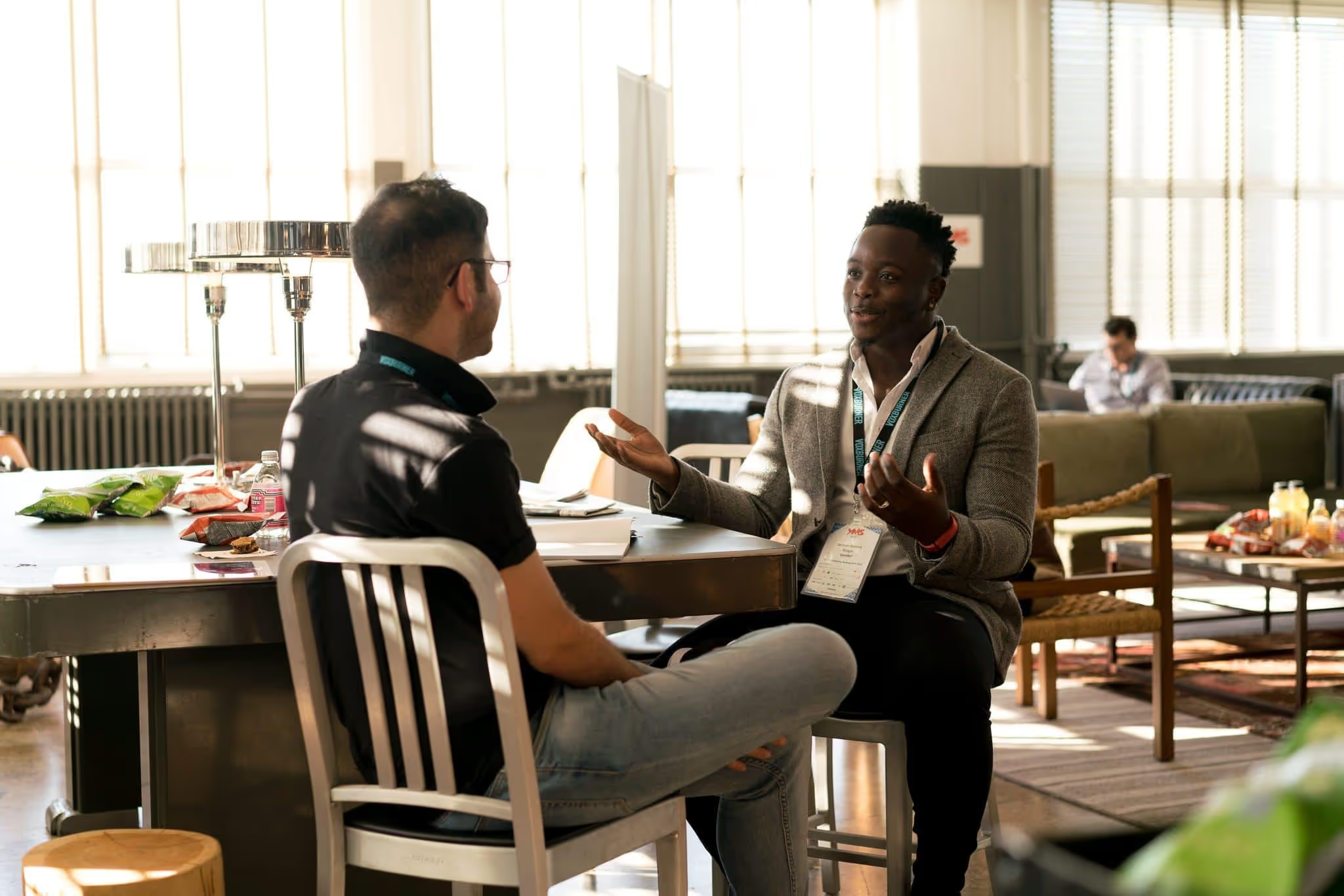
Relational organizing is slowly becoming a staple of current day political campaigns. It refers to the controlling of personal relationships during voter contact to achieve higher mobilization and better conversions. It includes a volunteer influencing anyone in their circle, and compelling them to engage in the election or for their nonprofits. This is also known as Peer to Peer (P2P) action.
They can encourage friends to do any or all of the following:
- Make a donation.
- Join an event.
- Cast a vote.
- Sign a petition.
- Sign up to become a volunteer.
An insight into Relational Organizing
The real interaction between their friend and volunteer can be executed either offline or online, relying on the channel that is more preferable for both parties.
It should be noted that the concept of relational organizing is not new. Personal voter outreach and door to door canvassing has always been the critical elements of all political campaigns and nonprofits awareness campaigns.
Strategically building a relational organizing campaign requires ample planning. It also requires resources. So, having enough time to execute is essential to succeed.
At least three months are recommended for local campaigns, a minimum of six months for regional campaigns, and six to twelve months for national or statewide actions.
Why is Relational Organizing so influential?
Recommendations from the friends add peer pressure and impact their behavior. In politics, this means that if a friend is openly supporting a particular candidate, the voter would be more likely to support that same candidate.
Individuals are persuaded to act on the information which comes from someone they trust. An open recommendation from a friend regarding the candidate is actually a testimonial or an endorsement that influences the voter's perception regarding the candidate.
Community assembling adds momentum. A few relational organizing tools encourage the building of the community within supporters. This means that the supporters can communicate with each other.
Hence, a supporter displays numerous contact points in a campaign. Ultimately, this makes them united and take action on problems affecting the party, far after the race ends.
Enthusiastic supporters are greatly invested in the candidate. The volunteers participating in relational organizing genuinely believe in the cause and want the victory. This makes them perfect advocates for the cause.
Not only can they figure out why the candidate requires the voter's support, they can also face non-supporters better. So, they need minimal training, and also boast a better probability of persuading voters.
The volunteers already know the voters they are interacting with. They know the core reservations for voting and the voter's intentions. This allows the volunteer to identify the messaging and tone in all outreaches.
The following expert tips will improve your political campaigns:
1.- Treat Relational Organizing like Door or Phone
Have someone in charge and adopt a methodical approach.
A relational organizing endeavor demands a lot of effort. Therefore, hire volunteers or staff to take responsibility and ownership. It's crucial to scale your relational program.
Just like other campaigns, develop a calendar. Set weekly and monthly goals for people and teams.
2.- Map out the Electorate
There's no use starting from scratch. Discover the fastest way to reach maximum people. Recognize the prominent groups in your electorate:
- Community
- Churches
- Senior groups
- Schools
- County parties
- Youth sports
- Advocacy groups
Don't forget to reach out to groups that will benefit from the bill passing or candidate winning.
3.- Engage the whole Campaign Team and leverage all channels
Opposite to calling, texting, or going peer to peer that are actually very discrete and personal efforts, you must engage the entire campaign network.
This kicks off with the campaign and candidate manager and the participation of all teams, like:
- Fundraising
- Field
- Communications
- Digital
Tools like canvassing apps and Citizen Relationship Managers (CRMs) can be great tools to help with organizing and managing the efforts of your campaign teams.

4.- Form volunteer Relational Organizing capacity
The most ideal way to boost your campaign is by transforming your supporters into organizers. Resultantly, they will recruit further supporters to communicate with their friends via call or text.
In this way, the campaign won't be bottlenecked by the hands of the campaign members. But this action requires resources and planning.
More than anything, the effective way to transform a canvasser to an organizer is a direct conversation.
5.- Initiate before Door, Phone, and different outreach methods
As per the research, it is evident that relational organizing is a practical way to convince voters. But it is not always feasible to reach every voter with this technique.
If you initiate the efforts beforehand, one can reach everyone from walk and phone lists.