
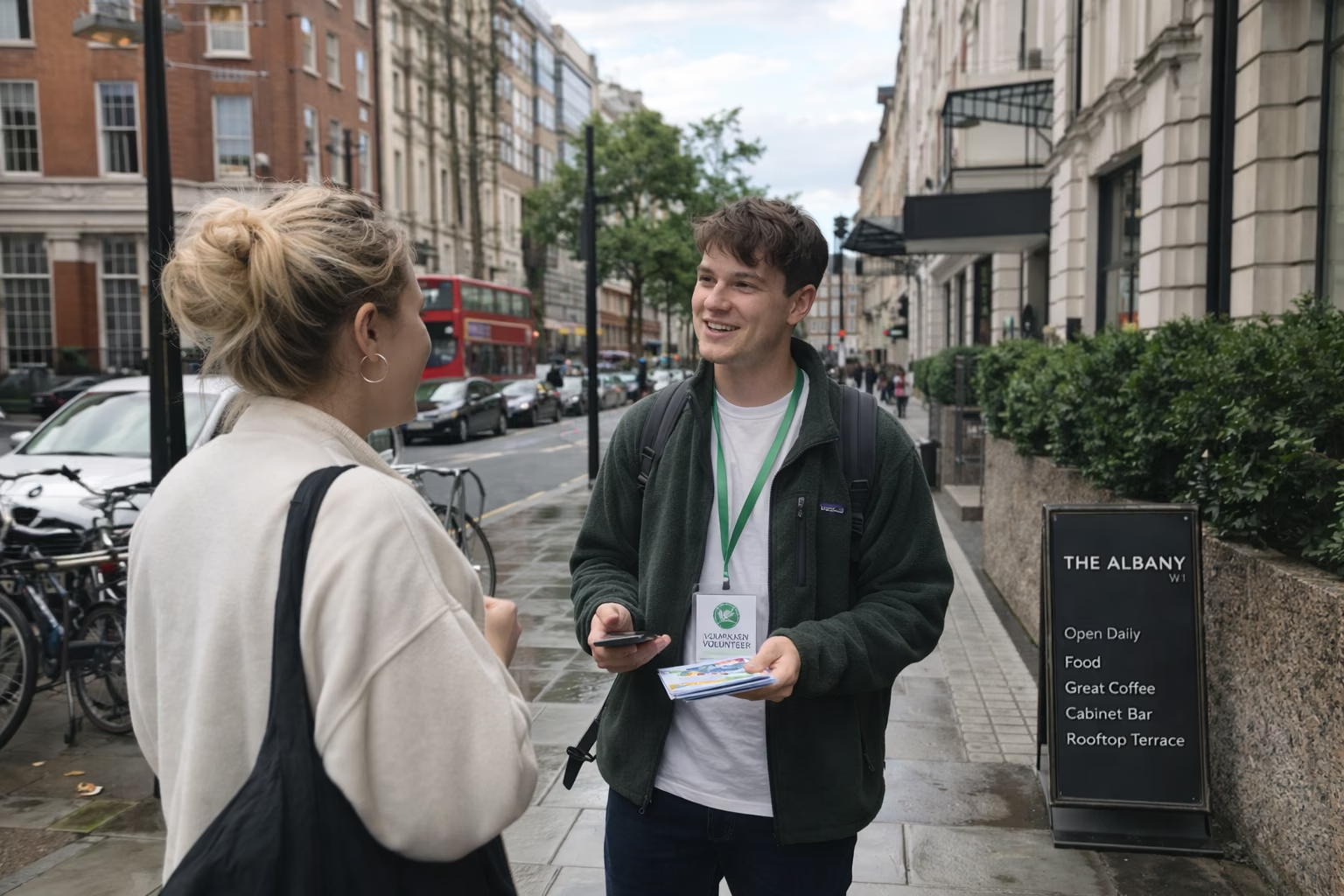
Keep training sessions energetic and brief. Volunteers give their free time. Respect it by being organized and efficient. A campaign that wastes volunteer time loses volunteers fast.
For campaigns managing large teams across multiple locations, volunteer coordination tools simplify scheduling, communication, and task assignment.
Legal Considerations and Compliance
Political volunteer recruitment must follow campaign finance and election laws. Ignoring compliance creates legal risks for your entire campaign.
Key rules to know:
- Volunteer time is not a campaign contribution. Individuals can volunteer unlimited hours without triggering donation limits - as long as they are not compensated.
- Employers cannot require volunteering. If a company sends employees to volunteer for a campaign, that may count as a corporate contribution. Keep volunteer participation genuinely voluntary.
- Disclosure requirements vary by state. Some states require campaigns to report volunteer activities. Check your state election commission's guidelines.
- Data privacy matters. Voter contact information collected during canvassing must be stored securely. Follow data protection regulations.
- Foreign nationals cannot volunteer. U.S. campaign law prohibits foreign nationals from providing services of value to campaigns. Verify volunteer eligibility.
Designate a compliance officer on your campaign team. This person reviews recruitment practices and ensures all activities stay within legal boundaries. Better to prevent issues than to respond to complaints.
Why Political Campaigns Depend on Volunteers
Political campaigns run on people power. Unlike nonprofit programs with year-round cycles, campaigns operate under tight deadlines with limited budgets.
Political volunteering also differs from nonprofit volunteering in three ways:
- Time pressure: Campaigns build toward a fixed election date. Recruitment must happen fast.
- Emotional investment: Volunteers join because they believe in a candidate or a cause. That passion drives action.
- Surge dynamics: Teams must scale up rapidly in the final weeks. A campaign might need 50 volunteers in January and 500 by October.
According to the U.S. Census Bureau (2024), civic engagement peaks during election years. People actively seek ways to participate. Your campaign just needs to give them a clear path in.
The value of this volunteer labor is significant. Independent Sector (2025) estimates volunteer time at $33.49 per hour. A team of 100 volunteers working 10 hours each contributes over $33,000 in value - resources no campaign budget can easily replace.
Where to Find Political Campaign Volunteers
The best political volunteers already care about your cause. Your job is to find them where they already gather.
Here are the most productive places to recruit:
| Source | Why It Works | How to Approach |
|---|---|---|
Local party organizations | Members are already politically engaged | Attend meetings, request mailing list access |
Universities and colleges | Students are passionate, available, and digitally skilled | Set up campus booths, partner with student orgs |
Labor unions | Union members understand collective action | Propose mutual support and joint canvassing |
Advocacy groups | Issue-aligned organizations share your voter base | Co-host events, share volunteer opportunities |
Faith communities | Churches and civic groups have built-in networks | Speak at community gatherings, build trust first |
Social media followers | Your online audience already self-selected | Convert followers into active volunteers with clear asks |
Start with your inner circle. Campaign staff, family members, and close supporters recruit the first wave. Then expand outward through their networks. Each volunteer becomes a recruiter when they feel connected to the mission.
For political campaigns that need to scale quickly, using a dedicated mobilization platform helps centralize signups and track every new recruit from first contact to first action.
Best Recruitment Channels for Political Campaigns
Effective recruitment uses multiple channels simultaneously. No single method reaches every potential volunteer.
Door-to-Door Canvassing
Door-to-door outreach remains the most personal recruitment method. Voters who meet a real person at their door are more likely to engage. Canvassers can recruit new volunteers during these conversations by asking: "Would you like to help us reach more neighbors?"
Phone Banking
Phone banks let you reach hundreds of people in a single evening. Train callers to identify interested supporters and invite them to upcoming events. Keep scripts short and conversational.
Text and SMS Campaigns
Texting campaigns have open rates above 90%. A well-timed text message - "Can you join us Saturday for a canvassing event?" - converts passive supporters into active volunteers. Peer-to-peer texting adds a personal touch that mass messaging cannot match.
Social Media Outreach
Platforms like Instagram, TikTok, and Facebook reach different demographics. Post real stories from current volunteers. Share behind-the-scenes content. Use event pages to drive signups. Authenticity matters more than polish.
Community Events and Rallies
Town halls, rallies, and community forums bring people together physically. Set up a volunteer signup table at every event. Hand out cards with a QR code linking to your signup form. Make joining easy and immediate.
Building a structured volunteer recruitment campaign ensures these channels work together instead of competing for the same audience.
How to Train and Onboard Political Volunteers
Fast, focused training turns supporters into effective campaigners. Political volunteers need to be ready quickly because election day does not wait.
Follow this onboarding sequence:
Step 1 : Welcome session (30 minutes)
Introduce the campaign's mission, values, and key messages. Make volunteers feel part of something meaningful.
Step 2 : Role-specific training (1 hour)
Teach the practical skills each role requires. Canvassers practice their pitch. Phone bankers rehearse scripts. Digital organizers learn the posting schedule.
Step 3 : Buddy system
Pair new volunteers with experienced ones for their first shift. This builds confidence and reduces drop-off.
Step 4 : Provide materials
Give every volunteer a kit - talking points, campaign FAQs, contact information for their team lead, and access to any digital tools.
Step 5 : Feedback loop
After the first shift, check in personally. Ask what went well and what felt confusing. Adjust training based on real feedback.
Keep training sessions energetic and brief. Volunteers give their free time. Respect it by being organized and efficient. A campaign that wastes volunteer time loses volunteers fast.
For campaigns managing large teams across multiple locations, volunteer coordination tools simplify scheduling, communication, and task assignment.
Legal Considerations and Compliance
Political volunteer recruitment must follow campaign finance and election laws. Ignoring compliance creates legal risks for your entire campaign.
Key rules to know:
- Volunteer time is not a campaign contribution. Individuals can volunteer unlimited hours without triggering donation limits - as long as they are not compensated.
- Employers cannot require volunteering. If a company sends employees to volunteer for a campaign, that may count as a corporate contribution. Keep volunteer participation genuinely voluntary.
- Disclosure requirements vary by state. Some states require campaigns to report volunteer activities. Check your state election commission's guidelines.
- Data privacy matters. Voter contact information collected during canvassing must be stored securely. Follow data protection regulations.
- Foreign nationals cannot volunteer. U.S. campaign law prohibits foreign nationals from providing services of value to campaigns. Verify volunteer eligibility.
Designate a compliance officer on your campaign team. This person reviews recruitment practices and ensures all activities stay within legal boundaries. Better to prevent issues than to respond to complaints.